Get expert help from team members like Azik

A Roof Over My Head
- Sep 23, 2026
A Roof Over My Head
It may be humbling to exit the comfort of your home to reside in a hut made with a roof of branches, knowing full well that it could rain, that the wind will find its way in thus rustling up the leafy roof, and that none of these walls surrounding you are built to actually last. But that’s Sukkot for ya.
The holiday of Sukkot comes just days after Yom Kippur where we’ve spent weeks working on our introspective work of return, connection and repentance and strangely, the next step in our Judaism is to go live outside in a flimsy hut.
Huh?
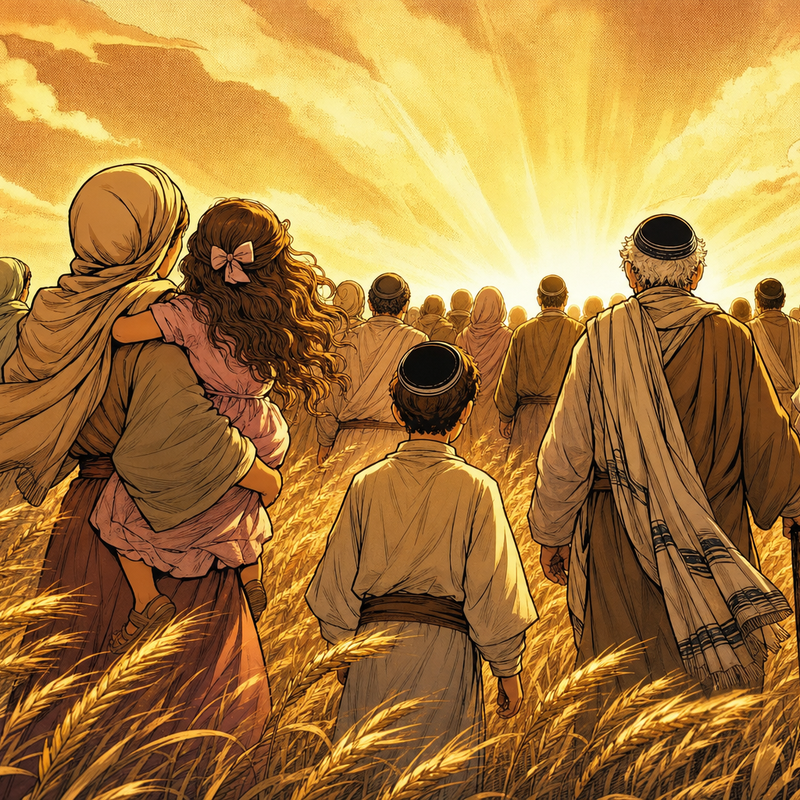
The Sukkah and its temporary nature symbolizes the fragility of life and one’s dependence on his trust on Gd. We pay homage on Sukkot to the temporary shelters of the Jews in their 40 years wandering the desert after the splitting of the Red Sea, thus forcing them to rely on Gd and their trust in Gd even if they were coming off of 400 years of Egyptian slavery. But unlike today, the Israelites had the cloud of Gd resting above them in their temporary shelter, a visual protection that they could trust. Our challenge nowadays is to shelter ourselves outside even without the tangible Divine protection that our ancestors once had.
And interestingly enough, the Talmud suggests that some sages thought that the sukkah in the desert was an actual hut similar to the ones we build now, while other sages debated that the sukkah was the Ananei Hakavod, the Clouds of Glory, that circled our nation and shielded them from the elements and enemies alike.
Yet we’re asked to build the hut, to sit under the branches, rain or shine, without the cloud; without the visible sign that we will be safeguarded. We’re asked to depend on our trust the same way our ancestors did, minus the reassurance, and that might just be the whole point. Faith that comes with assurance and visible protection isn’t much of an ask but trust in Gd without the visual of His shelter is the true pat-on-the-back moment.
Despite all of the discomfort on Sukkot, it is the one holiday the Torah titles Zman Simchateinu, the season of our joy, followed directly by the holiday of Simchat Torah, the joyous celebration of the Torah. The Torah doesn't title any other holiday as one of seasonal joy besides this one; not the clean slate of Yom Kippur, or the newness of Rosh Hashanah. But rather the one where we’re cold, uncomfortable, slightly damp, and structurally vulnerable, reminding us that the strength of the walls around us matter less than who we’re sitting under the branches with, at the meal we made regardless of comfort, and the decision to be fully present in something we know is temporary. Sukkot isn’t about trusting that we’ll get rained on but rather to sit in this temporary structure even though we might.
Wishing you and yours a beautiful Sukkot and Simchat Torah, from Judaica.com!