Get expert help from team members like Azik


Why Not All Eight?
- Nov 13, 2026
Why Not All Eight?
We’re all familiar with the flow and pattern of the Festival of Lights, Chanukah. We celebrate nights one through eight, and add a candle each night until by night eight our Menorahs are fully lit. It’s a practice we’ve done for centuries, yet we don’t seem to think too deeply about why we follow this specific pattern. If it really is such a light-filled holiday, why don’t we light all eight candles every night?
Perhaps the reason is that even the one small flame from night one has tremendous significance.
We live in a world where size matters; whether it be a large donation, an impressive accomplishment, or a strong impact, those that make significant contributions or have noticeable influence are often the ones that are admired. And oftentimes when we measure ourselves against these big accomplishments, it can feel overwhelming or even unachievable.
If one, for example, wanted to learn more Torah but simply could not find the time, they may question whether the five minutes that they can contribute is even worthwhile at all.
The Rambam (Maimonides) teaches us that even one small Mitzvah can tip the scale, even if it may seem inconsequential. We measure our successes based on tangible results but according to the Rambam, it is imperative to note that even one good deed, one small but positive action can carry Divine significance far beyond what we can comprehend. On that same note, Chassidus explains that the value of a Mitzvah is not necessarily measured by what it can accomplish but that the Mitzvah itself is a connection to Hashem.
A net positive.
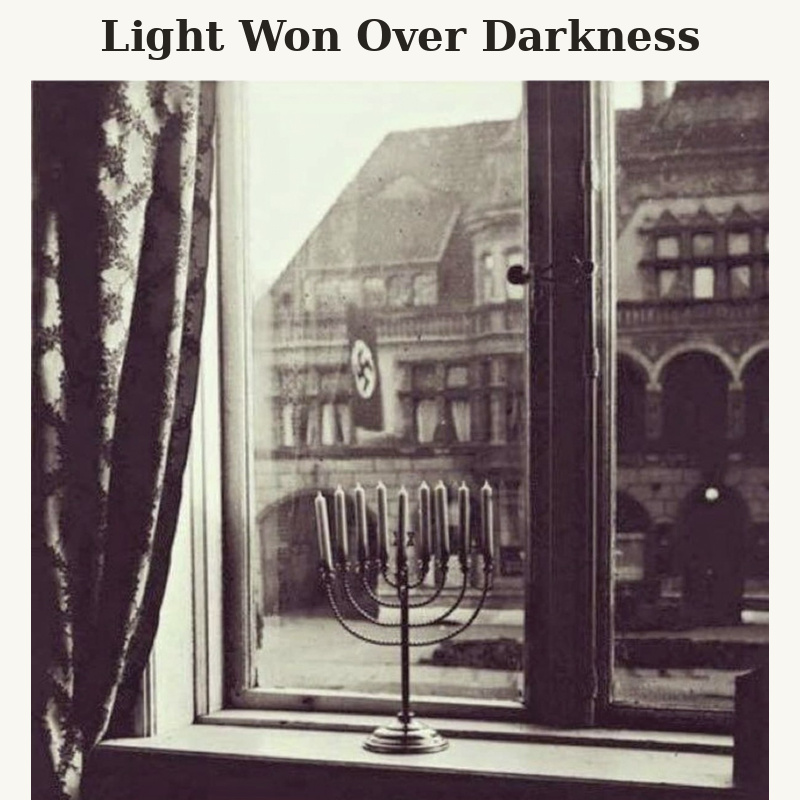
When a Jew performs a Mitzvah, they are fulfilling Hashem’s will, creating a connection that has inherent significance regardless of how particularly big or small or impressive the action may be. This brings forth an interesting distinction between nights one and eight of Chanukah. On the eighth night, our Menorahs are brightly lit, the shine clearly visible to all but on the first night, only one candle flickers. And yet, the tradition of Chanukah both nights remains the same. The first night’s lighting bears no incompleteness whatsoever simply because there are fewer candles.
Oftentimes when we commit to spiritual growth and connecting with Hashem, we hyperfixate on what we haven’t accomplished and overlook the significance of the journey of growing. But the first night of Chanukah reminds us that one candle is the same fulfillment of the Mitzvah as eight.
As we know, one of the Lubavitcher Rebbe’s missions that we carry on to this day is Chabad outreach. We might ask ourselves, Is one Jew lighting Shabbos candles or putting on Tefillin really that significant? Is it worth sending young men to the middle of nowhere to maybe, possibly find one Jew out in the wild willing to perform a Mitzvah that day? Wouldn’t it be more meaningful, or accomplish more, if we focused on getting the person to commit to doing the Mitzvah regularly?
Of course, consistency is important. But the Rebbe emphasized that a single Mitzvah has tremendous value on its own. Even if we don’t know whether that person will perform another Mitzvah again, the action itself is meaningful and perhaps it will lead to more. And that responsibility is on us.
A Jew who puts on Tefillin once may be inspired to do so again. A woman who lights Shabbos candles for the first time may begin to view Shabbos differently from that singular, meaningful moment. However, even if none of those things happen, the Rebbe teaches us that the Mitzvah that was done still holds strong significance.
When we approach a new goal, oftentimes it is suggested to “start small” and that’s exactly what night one of Chanukah represents. We don’t need to wait until we are ready to light all eight candles. We can begin with one.
May you have a bright and light-filled holiday! Happy Chanukah from Judaica.com!